Industrial Gas Safety Regulations in Canada: What Welding Businesses Should Know
Industrial gases are not just tools; they are an essential aspect of the welding industry across Canada. These are high-risk materials used in daily operations; therefore, it is necessary to follow compliance requirements when using them. This will ensure protection of workers, business continuity and equipment usage.
All around Canada, industrial gases are used for various purposes. Welding workshops, fabrication units, and industrial plants rely on gases such as argon, oxygen, acetylene, and carbon dioxide. These gases enable precision in work and thus fall under safety responsibilities.
It is thus essential to understand and be knowledgeable about the Canadian industry gas safety regulations. This blog outlines the rules and safety measures and explains how businesses can stay ahead of compliance requirements.
The Real Risks Behind Industrial Gases
Industrial gases are stored under high-pressure conditions. They can either be inert, flammable or oxidising. Failure to handle the gases can pose serious risks. It can lead to hazards like:
- Improper mixing of gases can cause explosions
- Getting trapped in spaces can lead to asphyxiation
- Flammable gases like acetylene can lead to fires
- Mishandling cylinders can cause high-pressure accidents
It is thus essential to ensure that all procedures are consistently followed to avoid accidents or risks, even for experienced welders. Hence, Canadian regulations are detailed and place a strong emphasis on handling, usage, and storage.
What are the Key Regulatory Bodies in Canada
Industrial gas safety is paramount in Canada. Federal and provincial authorities primarily govern them. Some of the key regulatory bodies are:
Canadian Standards Association (CSA)
They are responsible for developing safety standards necessary for storage systems, cylinders and gas equipment.
Occupational Health and Safety (OHS)
Every province has its own OHS regulations. They go on to outline aspects important for handling systems. It includes workplace safety standards, including gas handling practices.
WHMIS (Workplace Hazardous Materials Information System)
Every industrial gas handling must comply with specific regulations. These include safety data sheets (SDS), proper labelling of hazardous materials, and employee training in their handling.
Transport Canada
This regulatory body governs safety standards for the transportation of dangerous goods, including compressed gas cylinders.
Welding businesses must comply with applicable regulations, which may vary by operation and location.
List of Common Industrial Gases Used in Welding
Before we move ahead with the regulations, it is necessary to gain a clear understanding of which gases are used in the welding industry. These are:
- Acetylene – Fuel gas, known for its high flammability
- Oxygen – Supports combustion and enhances the intensity of flames
- Carbon Dioxide – Used widely in MIG welding
- Argon – This is an inert gas that has been used for shielding
- Nitrogen – It is widely used for pressure testing and purging
Every gas has its unique hazard. It is therefore necessary to follow specific safety measures when handling.
Key Regulations for Gas Cylinders
All the industrial gases must be stored with care. It is one of the most crucial aspects of following compliance. Here are some of the key requirements for managing its storage, which include:
Secure and Safe Storage
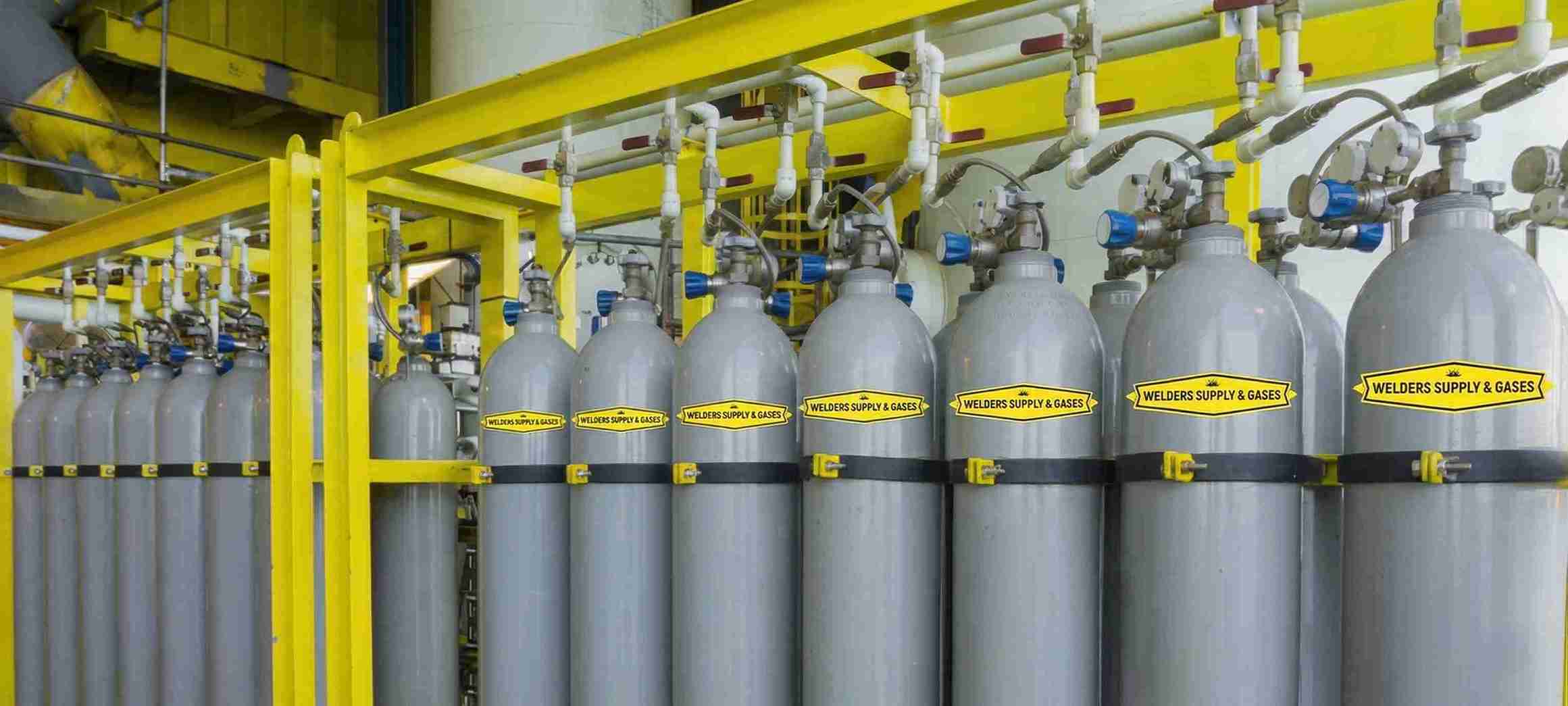
Cylinders must be stored in a secure place. It should be upright and secured using straps or chains to prevent tipping during transport and storage.
Separation of Gases
Highly flammable gases, such as acetylene, should be stored separately from oxidisers such as oxygen. It should be separated, kept at a distance, or separated by fire-rated barriers.
Ventilated Areas
Storage areas should be well-ventilated. It is also necessary to prevent gas buildup, which can be harmful to the workers.
Temperature Control
Cylinders must be stored in locations free from temperature and heat fluctuations. Ensure it is kept away from direct sunlight, heat sources, and extreme temperatures.
Labelling of Gases
Each cylinder must include labels indicating which gas is stored inside. It should be clearly classified to prevent any hazard or injury.
Practices to Follow Safe Handling of Cylinders and Industrial Gases
Improper handling of gas cylinders is a common cause of workplace incidents. Some of the best practices include:
- Use cylinder carts. Never roll cylinders or drag them
- Use protective caps and keep them on when the cylinders are not in use
- Open valves carefully and slowly
- Use the correct regulators mentioned for each gas type
- Avoid using damaged or leaking cylinders
- Every employee should be properly trained to recognise hazards. These include any unusual odour, pressure drops, or hissing sounds from the cylinders
Transport Compliance
Transport of industrial gases is regulated by the Transportation of Dangerous Goods (TDG) Act. These key rules are:
- Vehicles carrying the cylinders must include proper documentations
- The cylinders must be labelled and classified
- Drivers wil require TDF training certification
- Cylinders must be secured during transport
- Transport and vehicles that fail to comply with the regulations can result in fines
Requirements for Workplace Safety
The Canadian regulations have listed measures for handling industrial gases. These are:
- Detectors for gases like oxygen and carbon dioxide in enclosed spaces
- Availability of fire extinguishers and emergency tools
- Using gloves, flame-resistant clothing and goggles (PPE) kits when required
- Follow clearer protocols for fires, evacuations and gas leaks.
Maintenance and Inspection
Regular inspections are important for maintaining compliance and preventing accidents. These include:
- Hose integrity
- Cylinder condition, ensuring it has no rust, dents or leaks
- Valve and regulator functionality
- Storage area safety
- Routine maintenance helps ensure equipment operates safely
Compliance is important for obtaining a license to use industrial gases. Ignoring regulations can lead to consequences, including damage to the business, fines, employee safety issues, and increased insurance costs. Hence, it is necessary to comply with regulations to ensure seamless operations.
Final Thoughts
Industrial gas safety regulations in Canada are designed to protect businesses, workers, and the environment in the welding industry. It is necessary to understand and follow the rules for the smooth execution of operations.
Implementing proper storage, transportation, handling of cylinders, and training practices helps businesses minimise risks and ensure full compliance.
In industries like welding, precision is essential, so safety must never be ignored. Investing in the right process, partnership and equipment will keep the business compliant and help build trust and reliability.