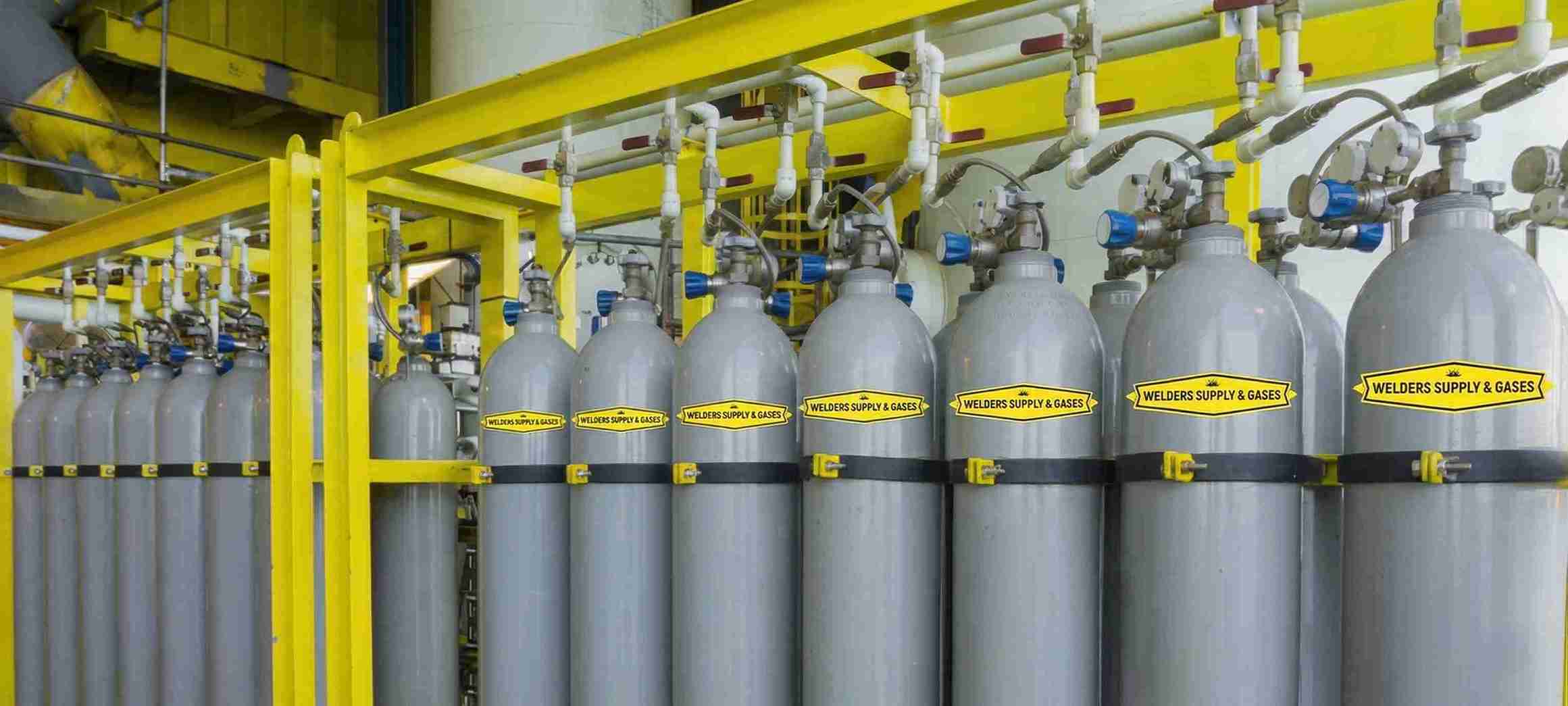
Acetylene is widely used for welding, cutting, brazing, and other metalworking applications. Because it is a flammable gas stored in a specially designed cylinder, proper storage is an important part of acetylene cylinder safety.
One of the most important rules is simple: Acetylene cylinders must be stored upright and secured against falling. This isn’t simply a matter of work preference. Canadian safety guidance and manufacturer documentation define cylinder orientation, protection, ventilation, temperature, and separation.
For businesses using acetylene in Canada, following the cylinder manufacturer’s instructions, the applicable Safety Data Sheet (SDS), workplace procedures, and local requirements is essential.
Why Acetylene Cylinders Must Be Stored Upright
Acetylene cylinders are different from many ordinary compressed-gas cylinders. Dissolved acetylene is stored in a cylinder containing a porous mass and a solvent that allows the gas to be stored safely under pressure. Because of this design, acetylene cylinder storage requires attention to orientation.
The Canadian Center for Occupational Health and Safety (CCOHS) recommends storing acetylene and other liquefied-gas cylinders with the valve end up. Specifically, it states that acetylene cylinders should not be placed horizontally.
Manufacturer guidance supports the same principle. Linde Canada’s acetylene SDS states that cylinders should always be secured upright.
The reason is that the cylinder’s internal solvent and porous mass are part of its safe storage system. Keeping the cylinder in the intended orientation helps maintain the manufacturer’s designed conditions.
What Can Happen If an Acetylene Cylinder Is Stored on Its Side?
An acetylene cylinder should not simply be treated like a conventional compressed-gas container that can be placed in any convenient position.
The manufacturers’ instructions may require that an acetylene cylinder that has been accidentally laid on its side be stood upright and left for some time before it is used. For example, Linde’s SDS calls for a minimum one-hour upright period after horizontal transport before use.
The proper response to an improperly positioned cylinder should be in accordance with the cylinder manufacturer’s instructions and applicable workplace procedures. Workers should not make up handling procedures based on assumptions about the cylinder.
This is one reason why acetylene cylinder handling should be covered in workplace training and documented in procedures.
Upright Storage Is About More Than Position
Keeping an acetylene cylinder vertical is only one part of acetylene storage safety.
CCOHS recommends that compressed-gas cylinders be stored in a clearly identified, dry, well-ventilated area away from heat and direct sunlight. Cylinders should also be secured from damage.
Health Canada’s storage guidance similarly recommends securing compressed gas cylinders upright and keeping storage areas well-ventilated and away from heat and direct sunlight.
Why Cylinder Restraint Matters
An upright cylinder that is not secured can still become a hazard. Equipment, carts, materials, or normal workplace activity can knock over a cylinder. Falling cylinders can suffer physical damage, and valve damage can create serious risks.
CCOHS recommends securing cylinders with an appropriate chain, belt, rack, or other suitable method to prevent them from falling.
The Canadian Environmental Protection Agency also advises securing cylinders before ancillary equipment is connected and positioned, ensuring the valve remains accessible in an emergency.
The specific restraint system should be appropriate for the cylinder and storage area rather than improvised.
Keep Acetylene Away From Heat and Ignition Sources
Acetylene is a flammable gas, so storage conditions matter. Linde Canada’s SDS states that acetylene cylinders should be kept away from heat, sparks, open flames, and other ignition sources. It also specifies that storage temperatures should not exceed 52°C (125°F).
CCOHS provides the same 52°C (125°F) temperature limit for compressed-gas storage areas and recommends clearly marked no-smoking areas to ensure caution and prevent accidents.
Storage requirements for Canadian workplaces may also be affected by provincial fire codes, the Authority Having Jurisdiction (AHJ), building conditions, the number of cylinders, and the specific storage arrangement.
Ventilation Is an Important Part of Acetylene Safety
A properly designed storage area should have adequate ventilation. Gas cylinders should not be stored in unventilated cabinets, closets, drawers, trunks, or other confined spaces. CCOHS specifically warns against storing acetylene cylinders in enclosed or unventilated areas.
Good ventilation helps prevent the accumulation of hazardous gases if a leak occurs. Storage areas should therefore be designed in accordance with applicable workplace, fire, and building requirements.
Separate Acetylene From Incompatible Materials
Acetylene should not simply be stored alongside other gases or materials in a facility.
CCOHS recommends separating fuel-gas cylinders from oxygen cylinders during storage and keeping cylinders away from combustible materials such as oil, grease, paper, and wood.
Canadian guidance also recommends dedicated cylinder storage areas with clear organization by gas type and appropriate separation of hazardous gases and oxidizers. Separation distance or barrier requirements can vary by applicable code, quantity, building type, and jurisdiction.
Follow the SDS and Manufacturer’s Instructions
There is no single storage arrangement that is appropriate for every facility. The cylinder manufacturer’s instructions and current SDS should be the starting point for acetylene tank storage. Workplace procedures should then account for the facility, cylinder quantity, storage location, fire protection, ventilation, and applicable regulations.
In Canada, Transport Canada regulates cylinders used for transporting dangerous goods, with CSA B339 and CSA B340 forming part of the applicable regulatory framework. The current CSA B339 edition is B339-25, published in January 2025.
Provincial requirements may also apply. For example, Ontario’s Fire Code states that acetylene cylinders must be kept upright except when being transported and that compressed-gas cylinders must be protected against mechanical damage and securely stored. Businesses should therefore verify requirements for their specific province and facility.
A Simple Acetylene Storage Safety Checklist
Before storing acetylene cylinders, businesses should confirm that:
- Cylinders are stored upright.
- Cylinders are properly secured.
- The storage area is dry and well-ventilated.
- Heat, flames, sparks, and ignition sources are controlled.
- Cylinders are protected from physical damage.
- Valves and protective devices are properly protected.
- Full and empty cylinders are clearly marked.
- Acetylene is separated from incompatible gases and materials as required.
- Storage temperatures are within the applicable limits. The current SDS and manufacturer instructions are available to workers.
This checklist is a general safety reminder, not a replacement for a facility-specific procedure, SDS, code requirement, or qualified safety professional. Ensure to follow the checklist properly.
Work With a Reliable Acetylene Supplier
Proper acetylene cylinder storage begins with using the right cylinder and understanding the manufacturer’s requirements. Welders Supply & Gases Inc. provides industrial and welding gases for businesses that depend on a reliable supply and appropriate cylinder service.
For businesses reviewing their acetylene cylinder safety practices, a qualified gas supplier can also be a useful resource for product information, SDS documentation, cylinder requirements, and safe-use guidance.
Final Takeaway
Proper cylinder placement is a basic yet critical component of safe acetylene storage. Acetylene cylinders should be stored upright and secured to prevent them from falling. The storage area should be ventilated, protected from heat and physical damage, and away from incompatible materials. Most importantly, businesses should follow the current manufacturer guidance, SDS, applicable Canadian requirements, and site-specific safety procedures rather than relying on informal handling practices.
For reliable acetylene and welding gas supply in Canada, Welders Supply & Gases Inc. can support businesses with their commercial gas needs and product information.