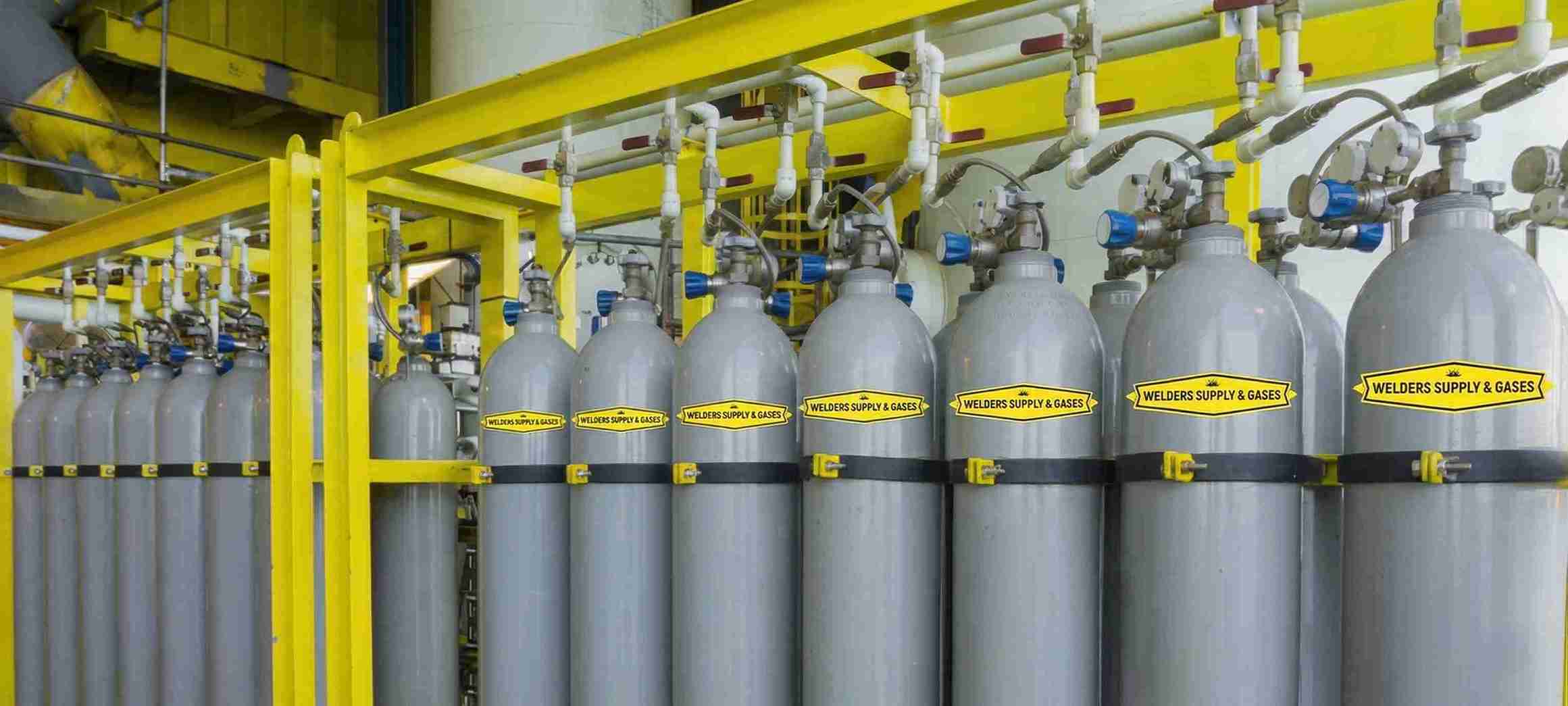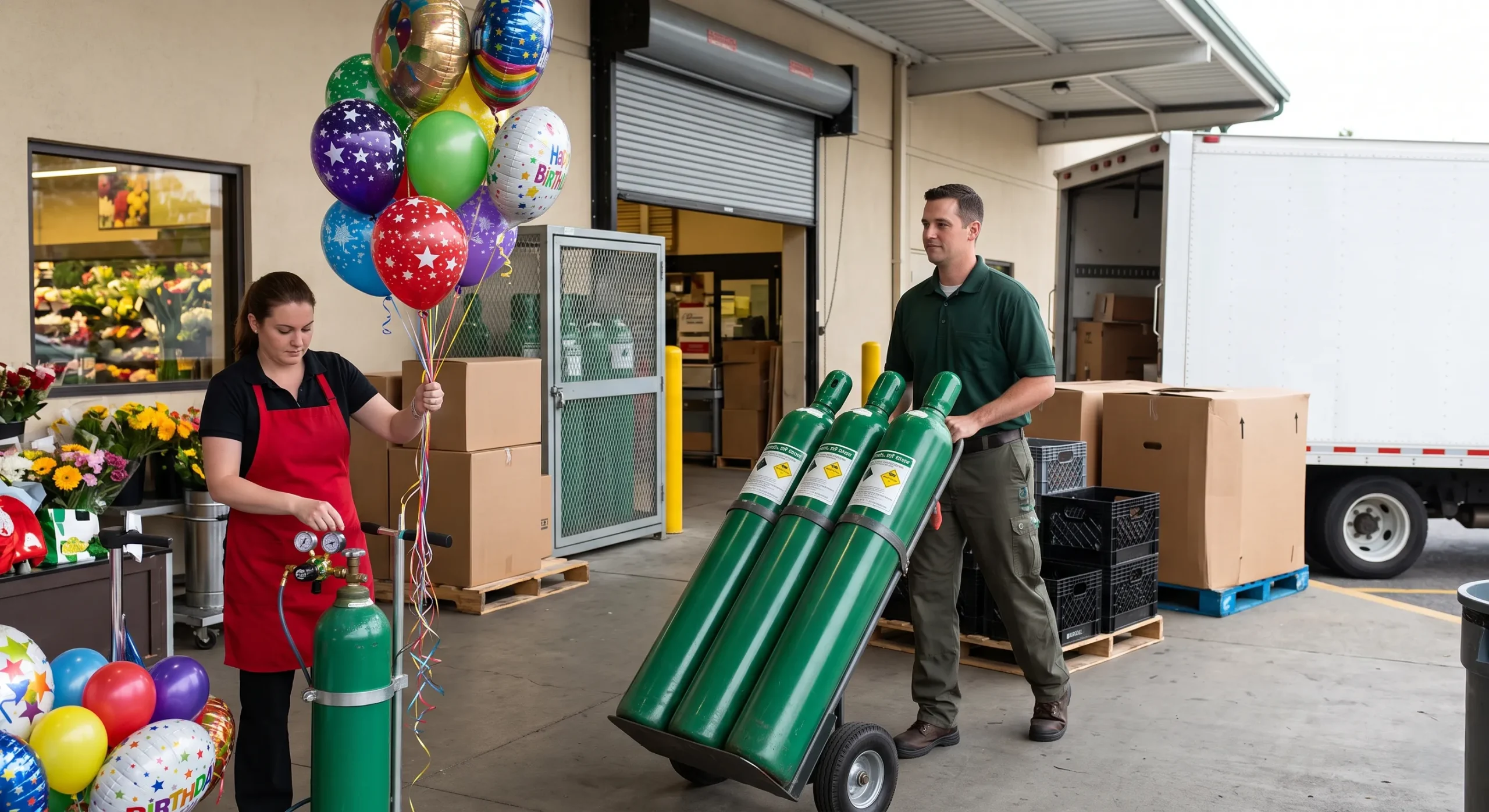
For a balloon business in Ontario and the GTA, knowing how many balloons a helium cylinder can fill is more than a simple math question. It affects inventory planning, event pricing, delivery schedules, and profit margins.
A cylinder that appears large may fill hundreds of small balloons but far fewer large ones. The answer also changes based on balloon size, balloon type, inflation level, temperature, and helium lost during filling.
So, how many balloons does one helium tank fill?
A useful starting point is the amount of helium available in the cylinder, measured in cubic feet (cu. ft.), and the approximate helium volume required for each balloon. Professional balloon industry charts commonly estimate about 0.25–0.30 cu. ft. for a 9-inch latex balloon and about 0.50 cu. ft. for an 11-inch latex balloon. Larger balloons can require several cubic feet each.
For a business, these numbers make it possible to estimate how many customer orders one cylinder can support.
How Is Helium Cylinder Capacity Measured?
Helium cylinders are commonly described by their cubic-foot capacity. For example, a cylinder may contain 55, 125, 242, or 291 cubic feet of helium.
The basic calculation is:
Estimated balloon count = Cylinder capacity ÷ helium required per balloon
For example, if a 55-cu.-ft. A cylinder is used for 11-inch latex balloons requiring approximately 0.50 cu. ft. each:
55 ÷ 0.50 = 110 balloons
That is the theoretical estimate. Actual output can be lower because some helium is lost during inflation, balloons may be overfilled, and operating conditions can affect results.
Helium Cylinder Balloon Capacity Chart
The following figures provide useful planning estimates. Manufacturer and industry charts show different results depending on the balloon specification and cylinder configuration, so businesses should treat these figures as approximate rather than guaranteed counts.
Cylinder Size | 9-inch Latex | 11-inch Latex | 16-inch Latex | 18-inch Foil |
55 cu. ft. | ~200 | ~100–110 | ~36 | ~125 |
125 cu. ft. | ~450 | ~250 | ~72 | ~272 |
242 cu. ft. | ~895 | ~484 | ~160 | ~550 |
291 cu. ft. | ~1,054 | ~570 | ~194 | ~648 |
A Western Enterprises cylinder capacity guide lists 242 cu. ft. at approximately 895 9-inch balloons, 484 11-inch balloons, and 550 18-inch foil balloons. It’s 291-cu.-ft. cylinder is listed at approximately 1,054 9-inch balloons and 570 11-inch balloons.
Other professional balloon suppliers use slightly different assumptions. For example, one current chart estimates 242 cu. ft. tank at approximately 806 9-inch latex balloons and 484 11-inch latex balloons.
Why the difference? The actual number depends on how much helium the particular balloon requires and how the balloon is inflated.
How Much Helium Does Each Balloon Size Need?
Balloon diameter has a major effect on helium consumption. A commonly used industry estimate is:
Cylinder Size | 9-inch Latex | 11-inch Latex | 16-inch Latex | 18-inch Foil |
55 cu. ft. | ~200 | ~100–110 | ~36 | ~125 |
125 cu. ft. | ~450 | ~250 | ~72 | ~272 |
242 cu. ft. | ~895 | ~484 | ~160 | ~550 |
291 cu. ft. | ~1,054 | ~570 | ~194 | ~648 |
These are approximate values drawn from professional balloon and helium capacity charts. This explains why balloon size matters so much.
Real Business Calculation: A 125-Cubic-Foot Cylinder
Suppose a balloon decorator in Toronto has a 125-cu.-ft. helium cylinder.
The business receives an order for 200 standard 11-inch latex balloons.
At approximately 0.50 cu. ft. per balloon:
200 × 0.50 = 100 cu. ft.
The order would theoretically use about 100 cu. ft. of helium.
That leaves approximately:
125 − 100 = 25 cu. ft.
So the business should not assume that the remaining helium is enough for another 50 standard balloons. Inflation losses and operating conditions need to be considered.
A professional cylinder chart lists a 125-cu.-ft. cylinder at approximately 250 11-inch balloons under its stated assumptions. For business planning, it is better to use a conservative working capacity rather than plan every cylinder down to the final balloon.
Real Business Calculation: A 55-Cubic-Foot Cylinder
Now consider a smaller 55-cu.-ft. cylinder.
If each 11-inch balloon requires approximately 0.50 cu. ft.:
55 ÷ 0.50 = 110 balloons
That gives a theoretical capacity of about 110 balloons.
One professional chart lists approximately 100 11-inch balloons from a 55-cu.-ft. cylinder, while another supplier gives approximately 110.
For a retailer, that difference matters. If a customer orders 100 balloons, a business should not assume that a cylinder with a theoretical 110-balloon capacity provides a comfortable 10-balloon safety margin.
Why Your Actual Balloon Count May Be Lower
A helium cylinder size balloons capacity chart gives you a starting point, not a guaranteed production number. Several factors can reduce the number of balloons you actually fill. This includes a balloon inflation calculator:
1. Overinflation
Overinflating a balloon can use considerably more helium than its recommended volume.
One helium capacity guide specifically warns that inflating a balloon beyond its intended size can dramatically increase helium consumption. For example, using helium intended for a 9-inch balloon to inflate it to 11 inches can substantially reduce the total number of balloons obtained from the cylinder.
2. Balloon Size Differences
Two balloons labeled with similar sizes may not consume exactly the same amount of helium. The material, shape, and manufacturer’s recommended inflation size can change the required volume.
3. Loss of inflation
Some helium may escape when connecting or removing the nozzle, when using the regulator or an accidental release.
4. Warmth
Temperature affects helium volume and the performance of the balloon. According to the guidance on professional helium capacity, actual output can vary based on environmental factors, including temperature.
5. Elevation
Elevation can also influence balloon performance and helium requirements. Manufacturer charts may specify the elevation or location under which their figures were calculated.
For GTA businesses, this is generally less significant than balloon size and inflation practices, but it is still one reason published capacity figures can vary.
How Many Customer Orders Can One Cylinder Fill?
Imagine a balloon retailer has a 242-cu.-ft. cylinder and primarily sells 11-inch balloons.
A professional cylinder chart estimates approximately 484 11-inch balloons from this cylinder. Now assume the retailer’s average order contains 25 balloons:
484 ÷ 25 = 19.36 orders
The cylinder could theoretically support around 19 orders of 25 balloons.
But a business should not build its inventory plan around exactly 19 orders.
If the retailer keeps a 10% planning buffer:
484 × 90% = 435.6 balloons
At 25 balloons per order:
435.6 ÷ 25 = 17.4 orders
That gives the business a more practical planning target of approximately 17 complete 25-balloon orders, with some capacity left for unexpected usage.
How to Calculate Your Own Helium Requirement
Step 1: Count the balloons
Determine how many balloons the order calls for.
Step 2: Find out the size of the balloon
Separate foil and specialty balloons into 9-inch, 11-inch and 16-inch sizes.
Step 3: Multiply by volume of helium
For example: 200 x 0.50 cu. ft. = 100 cu. ft.
Step 4: Provide a realistic operating buffer
Don’t plan to use all the cubic feet in the cylinder. Allow for normal wastage and unexpected usage.
Step 5: Compare with cylinder capacity
Choose a cylinder or a combination of cylinders that provides enough capacity for the entire job.
Build Inventory Around Orders, Not Just Cylinder Size
A common mistake is asking, “How many balloons does my tank fill?”
A better question is: “How many of my typical customer orders can this cylinder support?”
A retailer selling 25-balloon bouquets has different requirements from a decorator creating 500-balloon wedding installations.
Similarly, a party store that primarily sells 9-inch balloons may get far more balloons from the same cylinder than a decorator using 16-inch balloons.
Tracking actual helium consumption by job can therefore help businesses create better ordering estimates.
A Practical Helium Planning Rule for GTA Businesses
Before a busy weekend, review:
- Number of confirmed balloon orders
- Balloon sizes and types
- Estimated helium volume per balloon
- Cylinders currently available
- Remaining helium
- Expected filling losses
- Upcoming emergency orders
If your business regularly operates close to its maximum capacity, it may be worth discussing scheduled helium delivery with a commercial supplier rather than waiting until cylinders are nearly empty.
For businesses in Ontario and the GTA, Welders Supply & Gases Inc. can help commercial customers plan helium supply and delivery around their operational requirements.
Final Takeaway
There is no single answer to how many balloons one helium cylinder can fill. A 55 cu. ft. cylinder will yield about 100-110 standard 11-inch balloons, and a 125 cu.A 250-cu. ft. cylinder might give about 250, and a 242-cu.-ft. cylinder, about 484 under commonly published manufacturer assumptions.
But the real number is very dependent on size of the balloon, how much it is inflated, temperature, altitude and wastage of helium. The most secure approach to operating a balloon business is to gage helium needs from actual orders, keep a practical buffer, and plan cylinder deliveries ahead of peak demand. This simple helium cylinder balloon capacity calculation is a useful tool to control costs, avoid shortages and protect customer orders.