Welders Supply Gases Inc.

Author name: Hemrish Dooboree

Industrial gases in Canada
Industrial Gas

Choosing a Reliable Industrial Gas Supplier in Canada: A Guide for Commercial Buyers

Choosing a Reliable Industrial Gas Supplier in Canada: A Guide for Commercial Buyers Most Canadian businesses, from food processing plants to the welding industry, use industrial gases. Hence, choosing the right supplier is important for ensuring continuous availability for daily operations. A reliable gas partner will ensure an uninterrupted gas supply, as well as efficiency and safety. The market currently has multiple suppliers, making it challenging to choose the right one. If you run a business that uses industrial gas, this blog is for you. In this guide, we provide a detailed sneak peek at the factors to consider when choosing an industrial gas supplier in Canada. Why The Supplier You Choose Will Impact Your Business? Industrial gases such as nitrogen, carbon dioxide, oxygen, and argon are widely used in most industries and applications. These are not optional gases, but play an essential role in ensuring unhindered workflow. Any disruption to gas can significantly impact the business. These can lead to: Elevated operational costs Delay in production Safety risks Unmet deadlines Therefore, it is imperative to choose a dependable supplier. It’s not about convenience but about who can protect your business from any disruption. Here are key factors to consider when choosing an industrial gas supplier in Canada for commercial buyers: Consistent Supply of Gas The foremost factor is consistency. You require a supplier who not only delivers industrial gases on time but also without delay. A reliable supplier offers multiple advantages, which include: Availability of inventories Refill options during an emergency Scheduled delivery programs Businesses often require a continuous supply of inventory. Industries such as fabrication and welding cannot afford any delays in their processes. Any downtime can lead to a gas shortage and, in turn, a loss of business. That is when a dependable supply chain ensures daily operations are unhindered. Purity Level and Quality of Gases The quality of gas used directly impacts the output. For example, industrial gases are most used in welding and food packaging sectors. Use of impure gas can affect overall functionality and reduce quality. The use of impure gas in welding can cause weaker joints Inconsistent or low-quality gas can disrupt the processes when used in manufacturing Low quality of nitrogen can impact the shelf life in the food packaging sector A trustworthy supplier adheres to strict quality control standards. Moreover, they will provide certified gases that align with the Canadian standards. The supplier should prove the purity levels of their industrial gases before they are used for commercial purposes. Network and Delivery Speed Businesses require speedy and efficient delivery. When choosing a supplier, it is important to select those who provide a fast, consistent supply. They should be able to provide: Quick delivery, either on the same day or the next day Flexible scheduling of delivery A strong local distribution network Local suppliers tend to have an advantage, allowing them to respond quickly to urgent requirements. They must have a robust logistics system to ensure the business never comes to a halt. Follow Safety Standards and Compliance Industrial gases can be hazardous and compromise safety if not handled with care. Hence, safety is non-negotiable. Your supplier should: Provide cylinders that are properly labelled and tested Follow safety regulations as set by the Canadian government Ensure safe handling and transportation of cylinders Trained staff who also follow safety protocols Choosing a compliant supplier reduces overall safety risk and ensures that operations align with legal requirements. Technical Support An efficient supplier delivers gas but also provides additional technical support. Select suppliers who provide the following: Assist in optimising gas usage Recommend the right gas suitable for your business Provide support for troubleshooting It is advantageous for businesses that are efficient in adapting to newer technologies. The supplier must provide improved efficiency and output quality. Flexible Supply Options Every business will need industrial gas for various needs, and the supplier should be able to adapt accordingly. Common supply options include: Option for bulk delivery for large-scale operations Supply of cylinders for small to medium usage Microbulk systems for mid-sized facilities The flexibility ensures the supply model remains uninterrupted and supports business evolution. Transparent Pricing of Cylinders Pricing is another important factor when choosing a supplier. The supplier should provide clarity and transparency in costs. Before choosing a supplier, you must understand: The cost of refilling Terms of contract Delivery fees Ownership costs vs rental of a cylinder There must be no hidden costs; hence, the pricing structure must be detailed. Range of Services and Products An efficient supplier must also have a wide range of products and services. Additionally, they should be able to provide products that simplify operations. Herein, look for suppliers who offer: Speciality gas mixtures Industrial gases like carbon dioxide, acetylene, oxygen, argon and nitrogen Do they provide equipment like hoses, regulators and safety gear When working with a single supplier, check whether they offer both equipment and gas, which can help reduce coordination effort and improve efficiency. Customer Support and Responsiveness Good customer service is one of the most important aspects to manage daily operations. A reliable supplier will offer: Quick and timely response to all questions Support during the emergencies Easy communication channels Strong customer support will ensure that issues are resolved promptly and minimise any disruption to business. Reputation and Industry Experience Experience is necessary to reflect reliability. Before zeroing in on a supplier, look for: How long have they been in the business Ask for popularity in the industry Read customer reviews An established supplier will be able to provide consistent service and understand industry-specific needs. Final Thoughts A reliable industrial gas supplier in Canada is more than just making a purchasing decision. It is a strategic partnership. The right supplier will not only provide a consistent supply of industrial gases but also assume full responsibility for maintaining safety and quality standards, reducing risks, and providing expert guidance. Thus, rather than solely focusing on costing, it is necessary to prioritise expertise, reliability and service quality. A
Industrial Gas

Industrial Gas Safety Regulations in Canada: What Welding Businesses Should Know

Industrial Gas Safety Regulations in Canada: What Welding Businesses Should Know Industrial gases are not just tools; they are an essential aspect of the welding industry across Canada. These are high-risk materials used in daily operations; therefore, it is necessary to follow compliance requirements when using them. This will ensure protection of workers, business continuity and equipment usage. All around Canada, industrial gases are used for various purposes. Welding workshops, fabrication units, and industrial plants rely on gases such as argon, oxygen, acetylene, and carbon dioxide. These gases enable precision in work and thus fall under safety responsibilities. It is thus essential to understand and be knowledgeable about the Canadian industry gas safety regulations. This blog outlines the rules and safety measures and explains how businesses can stay ahead of compliance requirements. The Real Risks Behind Industrial Gases Industrial gases are stored under high-pressure conditions. They can either be inert, flammable or oxidising. Failure to handle the gases can pose serious risks. It can lead to hazards like: Improper mixing of gases can cause explosions Getting trapped in spaces can lead to asphyxiation Flammable gases like acetylene can lead to fires Mishandling cylinders can cause high-pressure accidents It is thus essential to ensure that all procedures are consistently followed to avoid accidents or risks, even for experienced welders. Hence, Canadian regulations are detailed and place a strong emphasis on handling, usage, and storage. What are the Key Regulatory Bodies in Canada Industrial gas safety is paramount in Canada. Federal and provincial authorities primarily govern them. Some of the key regulatory bodies are: Canadian Standards Association (CSA) They are responsible for developing safety standards necessary for storage systems, cylinders and gas equipment. Occupational Health and Safety (OHS) Every province has its own OHS regulations. They go on to outline aspects important for handling systems. It includes workplace safety standards, including gas handling practices. WHMIS (Workplace Hazardous Materials Information System) Every industrial gas handling must comply with specific regulations. These include safety data sheets (SDS), proper labelling of hazardous materials, and employee training in their handling. Transport Canada This regulatory body governs safety standards for the transportation of dangerous goods, including compressed gas cylinders. Welding businesses must comply with applicable regulations, which may vary by operation and location. List of Common Industrial Gases Used in Welding Before we move ahead with the regulations, it is necessary to gain a clear understanding of which gases are used in the welding industry. These are: Acetylene – Fuel gas, known for its high flammability Oxygen – Supports combustion and enhances the intensity of flames Carbon Dioxide – Used widely in MIG welding Argon – This is an inert gas that has been used for shielding Nitrogen – It is widely used for pressure testing and purging Every gas has its unique hazard. It is therefore necessary to follow specific safety measures when handling. Key Regulations for Gas Cylinders All the industrial gases must be stored with care. It is one of the most crucial aspects of following compliance. Here are some of the key requirements for managing its storage, which include: Secure and Safe Storage Cylinders must be stored in a secure place. It should be upright and secured using straps or chains to prevent tipping during transport and storage. Separation of Gases Highly flammable gases, such as acetylene, should be stored separately from oxidisers such as oxygen. It should be separated, kept at a distance, or separated by fire-rated barriers. Ventilated Areas Storage areas should be well-ventilated. It is also necessary to prevent gas buildup, which can be harmful to the workers. Temperature Control Cylinders must be stored in locations free from temperature and heat fluctuations. Ensure it is kept away from direct sunlight, heat sources, and extreme temperatures. Labelling of Gases Each cylinder must include labels indicating which gas is stored inside. It should be clearly classified to prevent any hazard or injury. Practices to Follow Safe Handling of Cylinders and Industrial Gases Improper handling of gas cylinders is a common cause of workplace incidents. Some of the best practices include: Use cylinder carts. Never roll cylinders or drag them Use protective caps and keep them on when the cylinders are not in use Open valves carefully and slowly Use the correct regulators mentioned for each gas type Avoid using damaged or leaking cylinders Every employee should be properly trained to recognise hazards. These include any unusual odour, pressure drops, or hissing sounds from the cylinders Transport Compliance Transport of industrial gases is regulated by the Transportation of Dangerous Goods (TDG) Act. These key rules are: Vehicles carrying the cylinders must include proper documentations The cylinders must be labelled and classified Drivers wil require TDF training certification Cylinders must be secured during transport Transport and vehicles that fail to comply with the regulations can result in fines Requirements for Workplace Safety The Canadian regulations have listed measures for handling industrial gases. These are: Detectors for gases like oxygen and carbon dioxide in enclosed spaces Availability of fire extinguishers and emergency tools Using gloves, flame-resistant clothing and goggles (PPE) kits when required Follow clearer protocols for fires, evacuations and gas leaks. Maintenance and Inspection Regular inspections are important for maintaining compliance and preventing accidents. These include: Hose integrity Cylinder condition, ensuring it has no rust, dents or leaks Valve and regulator functionality Storage area safety Routine maintenance helps ensure equipment operates safely Compliance is important for obtaining a license to use industrial gases. Ignoring regulations can lead to consequences, including damage to the business, fines, employee safety issues, and increased insurance costs. Hence, it is necessary to comply with regulations to ensure seamless operations. Final Thoughts Industrial gas safety regulations in Canada are designed to protect businesses, workers, and the environment in the welding industry. It is necessary to understand and follow the rules for the smooth execution of operations. Implementing proper storage, transportation, handling of cylinders, and training practices helps businesses minimise risks and ensure full compliance. In industries like welding, precision

Nitrogen

Nitrogen Gas Supply for Food Packaging in Canada: Purity & Compliance Explained

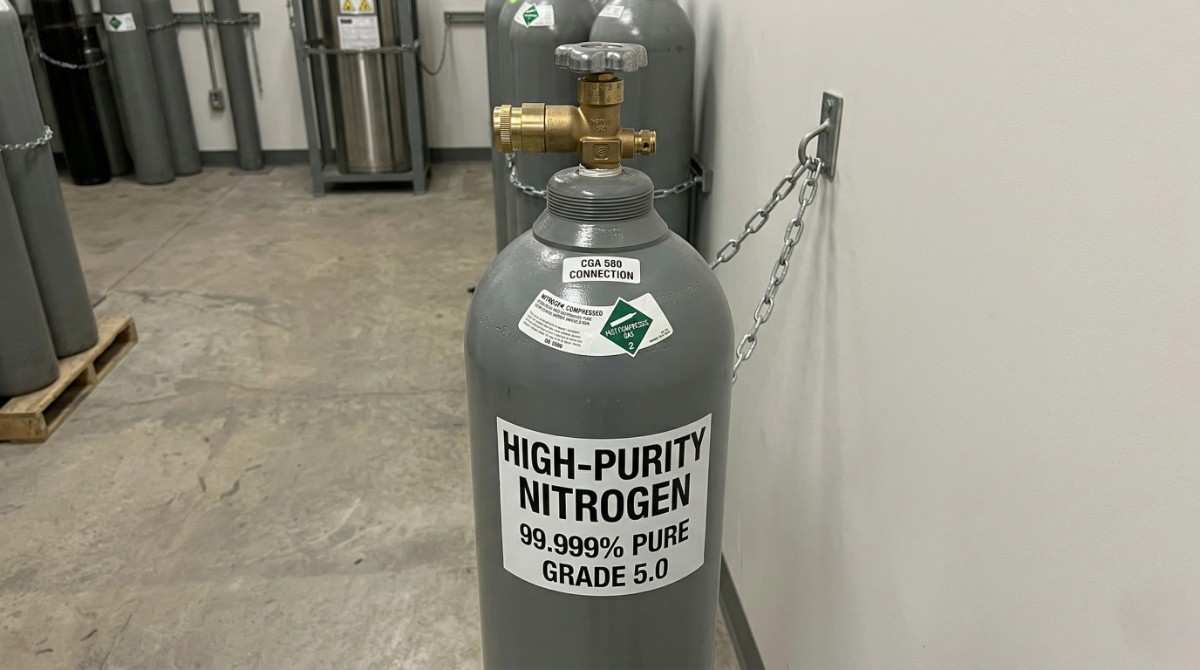
Nitrogen Gas Supply for Food Packaging in Canada: Purity & Compliance Explained The food industry today is no longer about presentation. It has evolved to place prime importance on maintaining quality and safety standards. Especially in Canada, food packaging is a regulatory necessity. Food manufacturers are increasingly relying on nitrogen gas, which plays a key role in maintaining food purity and quality.  Additionally, using a nitrogen gas supply for food packaging in Modified Atmosphere Packaging (MAP) is necessary to meet the strict regulatory standards. More and more businesses are opting for high-purity nitrogen not only to meet compliance standards but also to reduce waste. This blog provides detailed insights into nitrogen gas purity, compliance requirements, and the importance of choosing the right supplier for nitrogen gas supply in Canada. What Role Nitrogen Plays in Modern Food Packaging Nitrogen, in its purest form, is an essential element in the food packaging industry. It plays a silent yet powerful role in protecting food from rancidity and maintaining its purity, thereby ensuring compliance with quality standards. In Canada, all packaged food, from snacks to ready-to-eat meals, is nitrogen-flushed. Nitrogen is known for its inert nature. Unlike oxygen, it does not react with food components. This quality makes it the best alternative for preserving freshness. When nitrogen is used in Modified Atmosphere Packaging (MAP), it replaces oxygen inside the packs. Compared to oxygen, nitrogen helps prevent food spoilage and reduce losses from poor quality. This process of nitrogen gas usage in packaging offers many benefits. These include: It prevents the food from turning rancid Lack of oxygen in the package reduces and prevents oxidation Enables no change in taste, color, or texture of the food Nitrogen extends the shelf life of food that is prone to spoilage otherwise It protects fragile food items, such as chips or meat, from being crushed by friction during transport. Nitrogen is used in food products such as dairy, coffee, processed meat, and chips to ensure they reach consumers as fresh as when they were packaged. What Does “Food-Grade Nitrogen” Mean? Food-Grade Nitrogen is more than just ensuring food quality and purity standards. It covers a wider range of nuances, from consistency to safety and cleanliness. In Canada, food packaging must comply with nitrogen use requirements, and companies must qualify for them. To qualify the standards, the nitrogen must: Must meet the regulatory and food safety standards Must have a very low level of oxygen The food items should be free of moisture, oil, or particles that can cause spoilage It must be produced and delivered through clean systems Any trace of contaminants can impact the overall food quality. Hence, food-grade nitrogen undergoes strict quality control before qualifying for use in food packaging. A Gist of Nitrogen Purity Levels Purity is an uncompromisable element in the supply of nitrogen gas. The purity of nitrogen gas tends to vary with its use. Here is a gist of its purity ranges: 99.5% of nitrogen is suitable for basic packaging 99.9% are used in food applications 99.99% + nitrogen is a must for highly sensitive products. In the case of Canadian food packaging businesses, 99.9% nitrogen purity is considered the standard. However, this differs slightly for products like ready-to-cook meals and fresh dairy and meat, which may require higher purity to prevent spoilage. How Purity of Nitrogen Impacts Food Quality? Nitrogen’s inert nature prevents it from directly contacting food, thereby preventing spoilage, as with oxygen. Nitrogen does not react with the components, ensuring the food remains as it was at the time of packaging. Hence, the purity of nitrogen matters. Low-quality nitrogen can impact not only the product but also the brand image. Some of the potential problems of using low-quality nitrogen include: Increased oxygen contamination leads to faster spoilage of food components Increased microbial growth in the presence of moisture Residue of oil can lead to safety risks as well as impact health Inconsistency in gas quality can reduce the overall shelf life of the food product Therefore, it is important to maintain consistency in purity, especially in Canada, where high-quality nitrogen gas is essential for achieving high purity. Canadian Compliance Standards You Must Know Canada has well-defined regulations regarding food purity and safety. The gases used in food applications, such as packaging, play a very important role. Food manufacturers must therefore ensure that their nitrogen supply complies with regulatory requirements. Some of the key compliance factors are: Food Safety Standards The nitrogen used must meet food-grade specifications. It must be safe for packaging applications. Clean Delivery Systems All pipelines, cylinders, and storage tanks used in manufacturing and packaging must be free of contamination. Regular Testing Businesses must constantly monitor the overall quality of gas to ensure it remains consistent. Documentation & Traceability Maintaining proper records is necessary for audits and inspections. Food manufacturers in Canada who fail to meet these standards will face penalties, product recalls, and damage to their brand reputation. Methods Used for Supplying Nitrogen Gas for Canadian Businesses Opting for the right nitrogen supply method is essential. The method depends largely on the scale of operations. These include: Cylinder Supply Most suited for small-scale businesses It’s easy to manage Requires regular refilling Bulk Supply Ideal for medium to large operations that require a constant supply of nitrogen Reliable, however, it highly depends on the supplier schedules. On-Site Nitrogen Generation No stop in the supply of nitrogen Offer cost-effectiveness Ensures the purity levels are consistent Reduces the overall dependency on external supply Most modern food manufacturers in Canada are relying on on-site generation to improve efficiency and control the process. Must-Follow Practices To Maintain Nitrogen Quality Following best practices ensures optimal performance and compliance.  These include: Installation of high-efficiency filtration systems Monitoring moisture levels Using point-of-use purification filters Consistent and routine quality inspections Trained staff to handle gas systems All these factors make it necessary to choose a supplier with proven experience in food-grade gas supply, adherence to Canadian food safety standards, and strong technical support to

Co2

How Greenhouses in Canada Use CO₂ to Improve Crop Yields Safely

How Greenhouses in Canada Use CO₂ to Improve Crop Yields Safely Modern-day Canada has evolved in aspects of its farming techniques. Over time, greenhouse farming has become a cornerstone, replacing traditional techniques as demand for high-quality produce year-round has increased. Moreover, modern controlled environments depend heavily on precise inputs such as humidity, temperature, light, and, more importantly, carbon dioxide (CO₂). CO₂, when used in a controlled manner and at the right levels, enhances plant growth, improves quality, and increases yields. Hence, it must be handled with care and with precision. Maintaining proper levels ensures compliance with standards and worker safety. This blog explains how Canadian greenhouses safely and effectively use CO₂ to maximize productivity. Importance of CO₂ for Plant Growth Plants rely primarily on three components to perform photosynthesis. It is sunlight, water, and carbon dioxide. Among these, CO₂ is the limiting factor, with atmospheric CO₂ levels ranging from 400 to 420 ppm. Whereas inside a greenhouse, its levels drop quickly, allowing plants to absorb CO₂ in the morning, when photosynthesis is at its peak. Limited supply of CO₂ levels can: Slow down plant growth Reduce the overall development of leaves Reduced fruit production Hence, raising CO₂ levels in a controlled manner is important in ensuring that farmers achieve higher productivity and healthier yields. What is Controlled CO₂ Enrichment? CO₂ enrichment is the process of adding carbon dioxide to a greenhouse environment. It is added optimally to maintain a consistent plant growth. The optimal range of CO₂ levels for greenhouses is: Present in the natural air – 400 ppm In an enriched environment – 800 to 1200 ppm Controlled CO₂ enrichment accelerates photosynthesis and thereby plant productivity. The process converts light into energy quickly and produces more biomass. This technique is used across Canada, mostly in commercial greenhouse crops such as: Herbs and leafy greens Medicinal and specialty crops Cucumbers and tomatoes Berries and strawberries Peppers Cannabis cultivation Advantages of CO₂ Enrichment in Canadian Greenhouses To fully benefit from CO₂ enrichment, it must be implemented in a measured and controlled manner. At this point, it delivers measurable advantages. These include: Enhanced Production Higher CO₂ levels lead to increased biomass production. This results in greater harvest and output. Speedy Growth Cycles Plants under CO₂ enrichment mature quickly, allowing harvest of multiple crops within a season. Improved Quality of Plants CO₂ assists in enhanced leaf size. There are better plant health and fruit weight. Efficient Water Use Plants use water more efficiently when CO₂ concentrations are high. It reduces the need for irrigation. Better Resistance to Stress Proper CO₂ levels help plants develop greater tolerance to environmental stress. CO₂ enrichment offers additional benefits, including higher profitability and improved consistency, which are widely used in commercial greenhouse operations. How is CO₂ Supplied in Canada? Greenhouses in Canada use various methods for introducing CO₂ into the environment. These help promote the enriched growth of plants and yield faster. Some of the methods used widely for adding CO₂ in the growing environment include: Compressed CO₂ Gas Cylinders These include using a high-purity CO₂ supply These are ideal for carrying out small to mid-sized operations Offers easy control and regulation Bulk Liquid CO₂ Systems These are delivered in large-sized tanks Liquid CO₂ systems are suitable for large-scale commercial greenhouses It ensures a steady and consistent supply CO₂ Generators CO₂ is produced by burning fuels like propane or natural gas It is cost-effective. Yet there must be proper ventilation to prevent safety issues The process can introduce additional moisture and heat Among these options, compressed and bulk CO₂ systems are most widely preferred for their precise and high-purity control. These are used for high-value crop production. What are the Safety Considerations When Using CO₂? CO₂ is an essential component for increasing plant growth. However, excessive levels can pose greater risks for the workers. Hence, maintaining and following certain safety measures is essential. Here are key safety risks: Higher concentrations of CO₂ can lead to decreased levels of oxygen It can expose the workers to CO₂ beyond safety limits, thereby causing fatigue and dizziness Extremely high levels can be more hazardous Safety Exposure Limits It is essential to ensure the CO₂ concentration is within the safe exposure limits, which are: For Occupational exposure, the limit is 5,000 ppm, averaged over 8 hours. For short-term exposure, the limit is 800-1200 ppm. These are below the limit but can still be monitored. Best Practices for Using CO₂ Safely Canadian greenhouse operators follow strict safety protocols to ensure the working conditions are safe and hazard-free for everyone. The measures taken to use CO₂ safely include: Installing Monitoring Systems to Check CO₂ Levels It helps continuously monitor CO₂ levels to maintain a safe, optimal concentration inside the greenhouse. Using Automated Control Systems The system allows adjustment of CO₂ levels according to ecosystem conditions and plant requirements. Proper Ventilation Sufficient ventilation maintains air balance and prevents CO₂ buildup inside the greenhouse. Trained Staff Workers are trained to understand how CO₂ systems work and how to respond to alerts. Regular Maintenance of Equipment Perform system inspections to maintain safety and efficiency Following these practices ensures the greenhouse can be safely harnessed and benefits modern farming without compromising workers’ health. Compliance and Regulations in Canada CO₂ used in a greenhouse is subject to the safety of workplace and environmental guidelines.  The compliance areas are: Proper storage and handling of compressed gases Certifying equipment and its maintenance Following safety standards at the workplace for gas exposure Emergency response planning Employers must ensure that CO₂ systems comply with Canadian occupational health and safety regulations to avoid penalties and associated risks. Future of CO₂ in Greenhouse Farming As Canada continues to invest heavily in sustainable agriculture, CO₂ enrichment emerges as the future of greenhouse farming. These include: Integrating automated climate control systems Increased use of vertical farming Use of captured industrial CO₂ for sustainability Using sensors and AI for precision agriculture Final Thoughts CO₂ enrichment is a powerful technique that enables Canadian greenhouse growers to increase crop

Scroll to Top