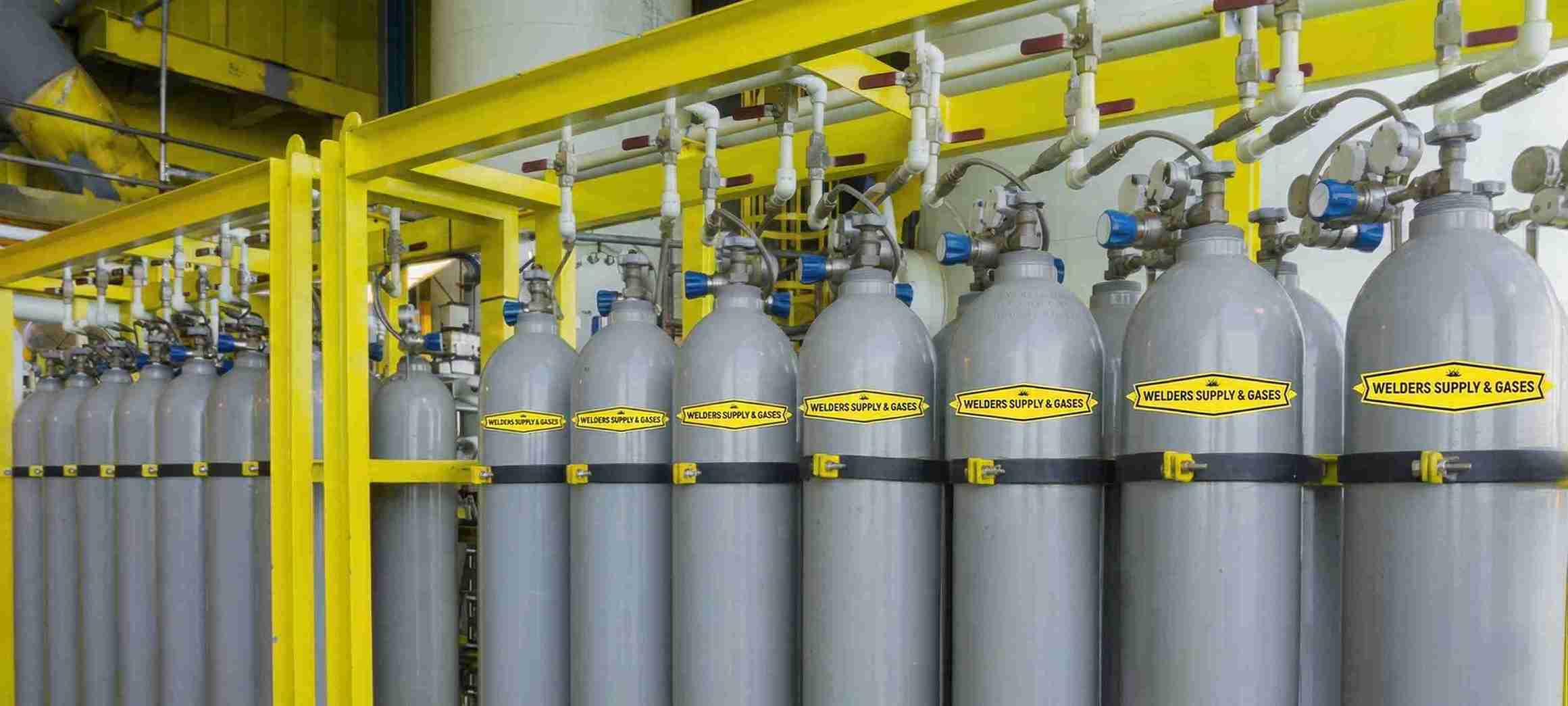
Choosing the right shielding gas for MIG welding can make a big difference to your weld. It affects how the arc behaves, how much spatter you get, how deep the weld goes, and how the finished bead looks.
The best gas depends on the metal, the welding wire, and the result you need. Some gases cost less, while others can help produce a cleaner finish. Knowing the main options makes it easier to choose the right one for your project.
What Does Shielding Gas Do in MIG Welding?
MIG welding utilizes an electric arc for melting the metal. Later, it helps in joining two pieces together. As the metal melts, the weld area needs protection from the surrounding air.
The shielding gas creates a protective blanket around the hot metal. It helps keep air out of the weld pool, which can cause small holes called porosity and other weld flaws. Gas also impacts arc stability, splatter, and the flow of molten metal.
Without the right gas, even a skilled welder may struggle to get a strong, clean weld.
Common MIG Welding Gas Types
The basic MIG welding gas types used for MIG welding are pure carbon dioxide (CO₂), mixtures of argon and CO₂, and argon-based gases. Each is good for different metals and welding demands.
1. Pure CO₂
Mild steel is commonly welded with pure CO₂. It is often cheaper than argon-CO₂ blends and can provide deep weld penetration.
But it tends to cause more spatter and a rougher-looking weld bead. This might mean more time cleaning up the finished work.
This makes pure CO₂ ideal for general steel fabrication and repair work where cost and penetration are important.
2. Argon-CO₂ Blend
A blend of 75% argon and 25% CO₂, often called 75/25 or C25. It is a lucrative option for MIG welding mild steel.
This mix often gives a more stable arc, less spatter, and a cleaner-looking weld than straight CO2. It is a practical choice for workshops carrying out general steel fabrication and repairs, and also for projects requiring a good finish.
Other mixes like 90% argon – 10% CO2 could be suitable for some welding processes and thicker steel. The correct blend is dependent on the welding process, wire, and equipment settings.
3. Pure Argon and Argon-Based Blends
Pure argon is widely used for MIG welding gas for aluminum. It helps create a stable arc and supports good weld quality when the correct aluminum wire and settings are used.
Some jobs involving thicker aluminum may need an argon-helium blend to provide more heat. Stainless steel also uses special gas blends, often with only a small amount of CO₂ or another active gas.
Do not assume one argon blend works for every metal. Always check the wire maker’s guidance and the welding procedure for the job.
Argon vs. CO₂ for MIG Welding: What Is the Difference?
The choice between argon vs CO2 for MIG welding depends on the metal and the finish you need.
Feature | Pure CO₂ | Argon-CO₂ blend |
Common use | Mild steel | Mild steel |
Cost | Often lower | Often higher |
Weld penetration | Can be deep | Depends on the blend and settings |
Spatter | Usually more | Usually less |
Bead appearance | Can be rougher | Often cleaner |
Aluminum MIG welding | Not suitable | Standard steel blends are not suitable |
For many mild-steel jobs, 75/25 is a useful starting point when a clean bead and less spatter matter are desired. Pure CO₂ may be a practical choice when budget and deeper penetration are more important.
For aluminum, use a gas made for aluminum MIG welding, commonly pure argon. CO₂-based steel blends are not suitable for aluminum because they can react with the hot metal and harm weld quality.
How to Choose the Best Gas for MIG Welding
There is no single best gas for MIG welding for every job. Consider these four points before choosing.
1. Check the base metal
Mild steel, stainless steel, and aluminum all require different gases. 1. Choose the metal you are going to weld. If you use a gas for a different metal, you may get terrible results.
2. Match the gas to the wire
The welding wire is as important as the base metal. Shielding gases may have to be different for solid steel wire, stainless wire, and aluminum wire. Check the advice of the wire maker before buying the gas.
3. Think about the finish
If the weld will be visible, have less spatter, and have a smoother bead, that means it uses less time for cleanup. If deep penetration is required, the gas and welding settings must work in tandem.
Gas alone will not give a good weld. The result is also affected by joint design and metal preparation, in well wire feed speed, voltage, and welding technique.
4. Compare the full cost
The cheapest cylinder may not be the cheapest option for the whole job. More spatter can mean extra grinding and cleanup. A gas that supports a better welding process may save time and reduce rework.
Compare gas costs with the amount used, the required finish, and the time needed to complete the work.
Common Mistakes When Choosing MIG Welding Gas
few simple mistakes can affect weld quality:
· Using one gas for every metal: Steel and aluminum do not use the same standard gas setup.
· Choosing by price alone: Lower gas cost may lead to more cleanup or rework.
· Ignoring the wire label: The filler wire maker may specify a particular gas or blend.
· Using the wrong settings: Gas choice, voltage, wire speed, and welding method must work together.
· Forgetting the work area: Drafts can disturb shielding gas and expose the weld pool to air. Suitable protection and ventilation are important.
If you keep getting porosity, excessive spatter, or an uneven bead, check the gas type and setup alongside the wire, nozzle condition, metal cleanliness, and machine settings.
Choose Gas That Fits Your Project
Choosing the right MIG welding gas for steel selection starts with three questions: What metal are you welding? Which wire are you using? What kind of weld finish do you need?
For many mild-steel projects, a 75/25 argon-CO₂ blend offers a good balance of weld quality and ease of use. Pure CO₂ can be a lower-cost option for suitable steel work, while pure argon is a common choice for aluminum MIG welding. Stainless steel and specialized jobs may need a different blend.
If you are unsure, check your welding machine manual, wire manufacturer’s instructions, or welding procedure before choosing a gas.
Welder’s Supply & Gases Inc. provides welding gases and supplies for welding applications. Matching the gas to your metal and process can help you make a better choice before your next project.
Need Help Choosing MIG Welding Gas?
Not sure which shielding gas is right for your next welding project? Contact Welder’s Supply & Gases Inc. for information about welding gas options. Whether you are working with mild steel, stainless steel, or aluminum, choosing a gas that matches your metal and welding wire can help you achieve better results. Reach out to discuss your application and find a suitable gas for your needs and choose the best suitable MIG welding gas for your business.